
GEOPOLITICS / OIL TANKERS / CONCEPTUAL
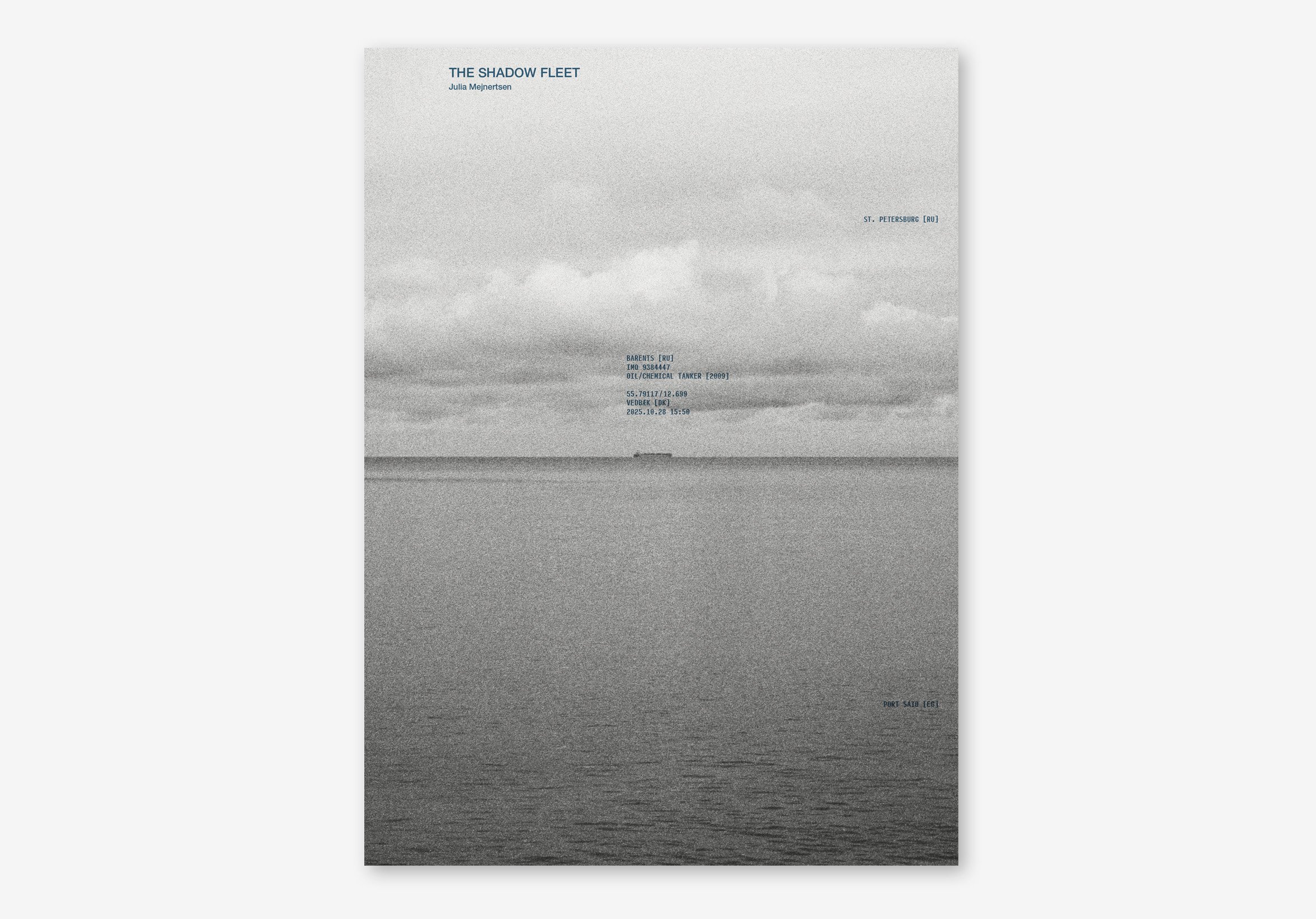
THE SHADOW FLEET
Julia Mejnertsen
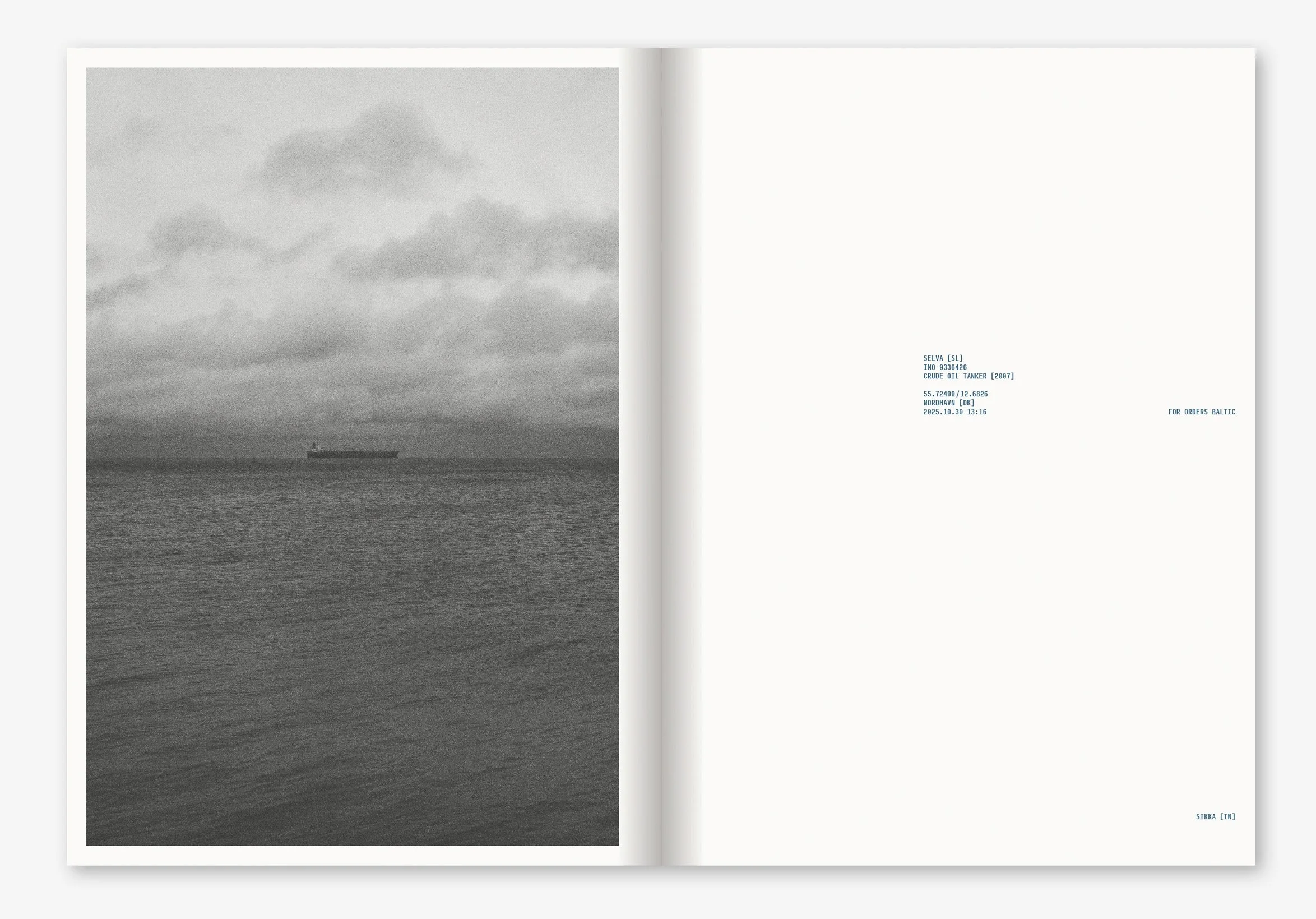
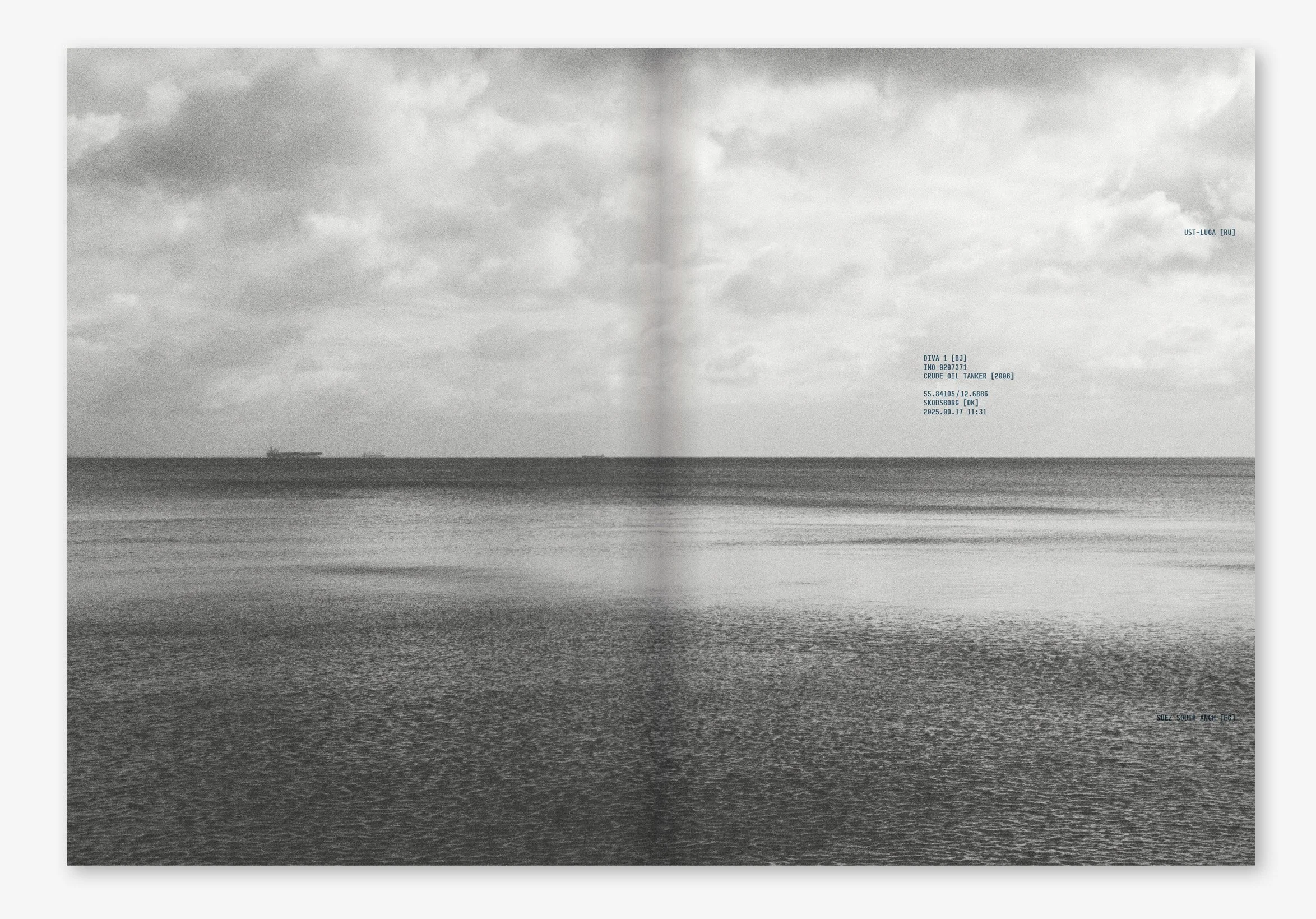
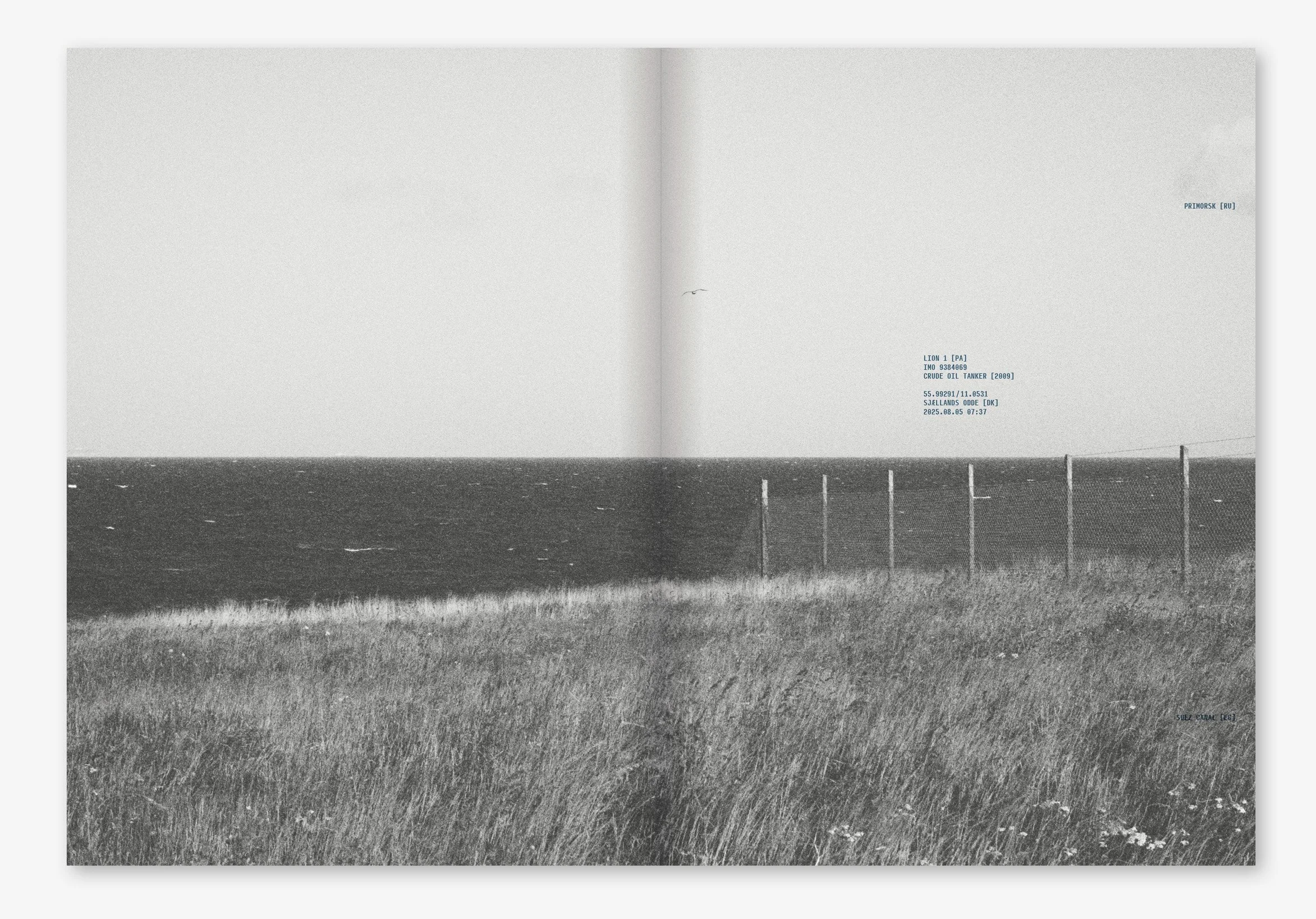
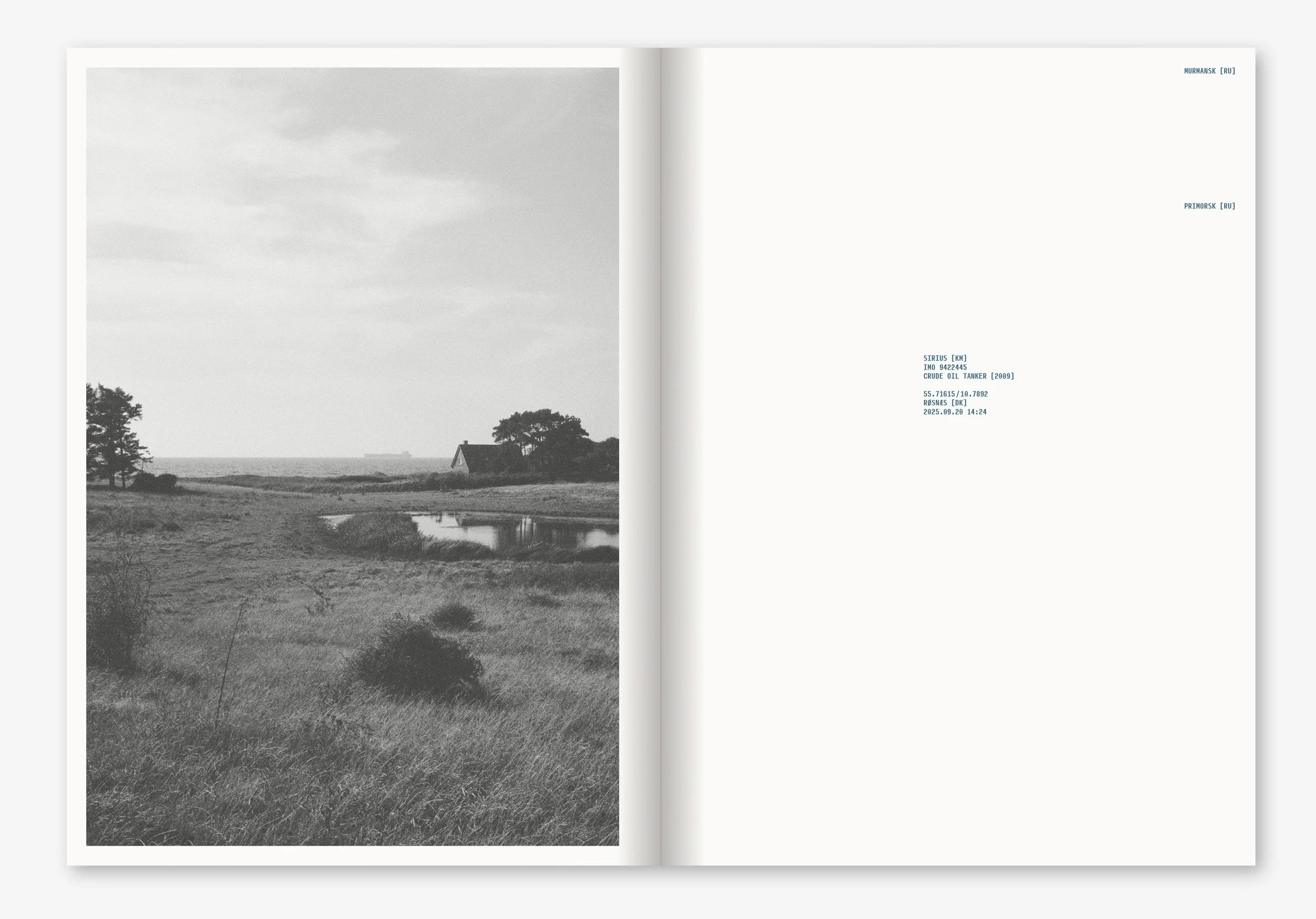
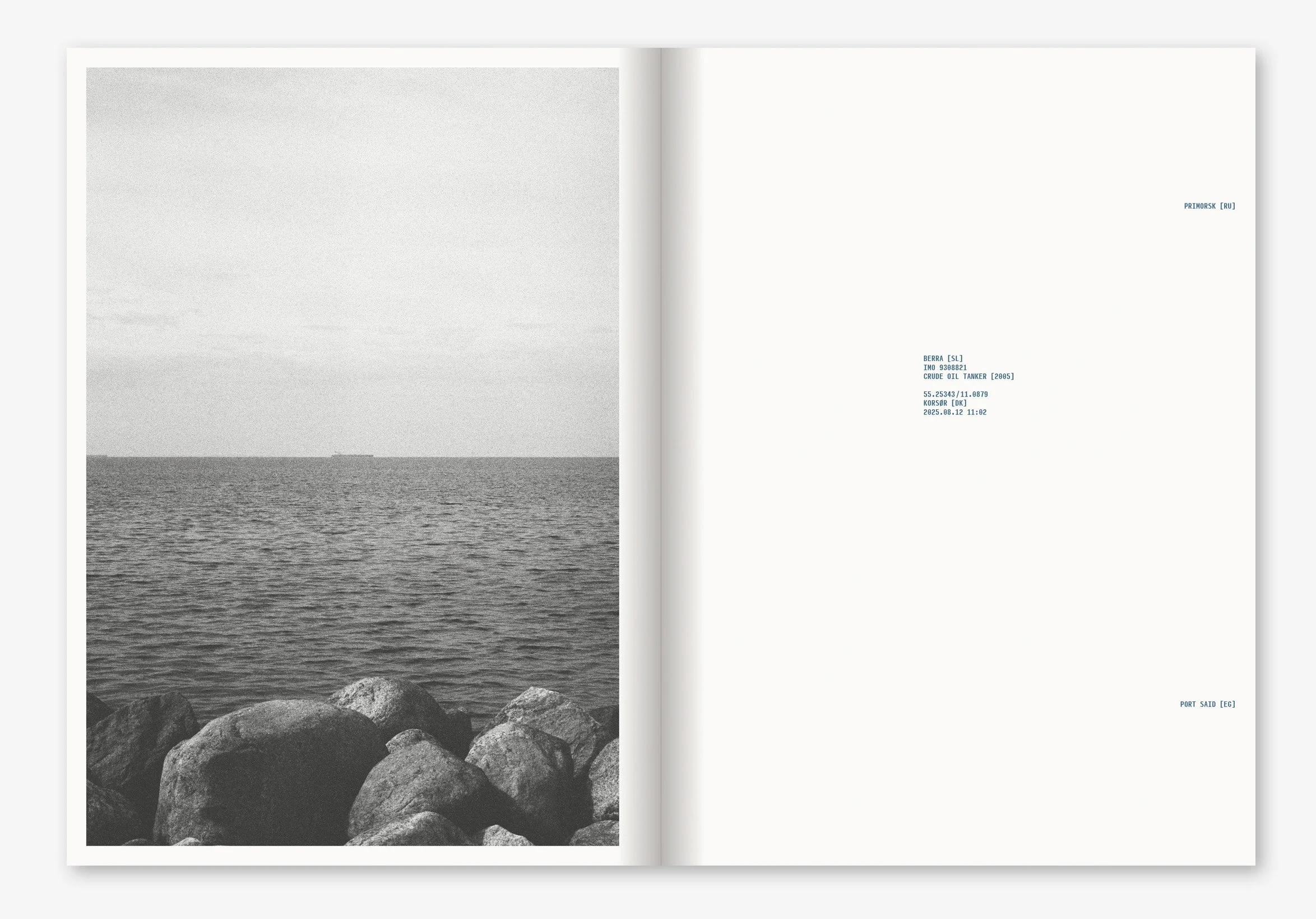
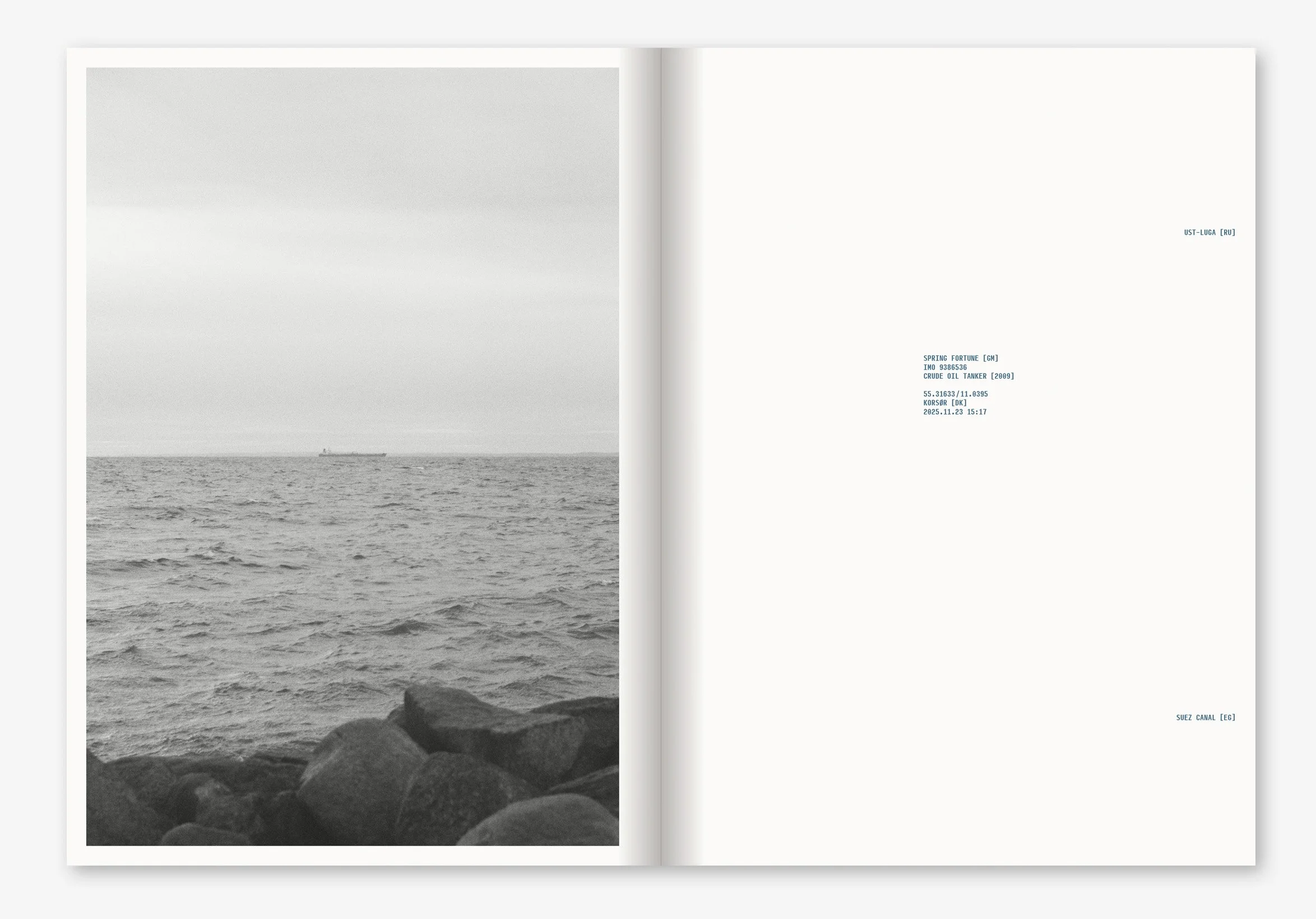
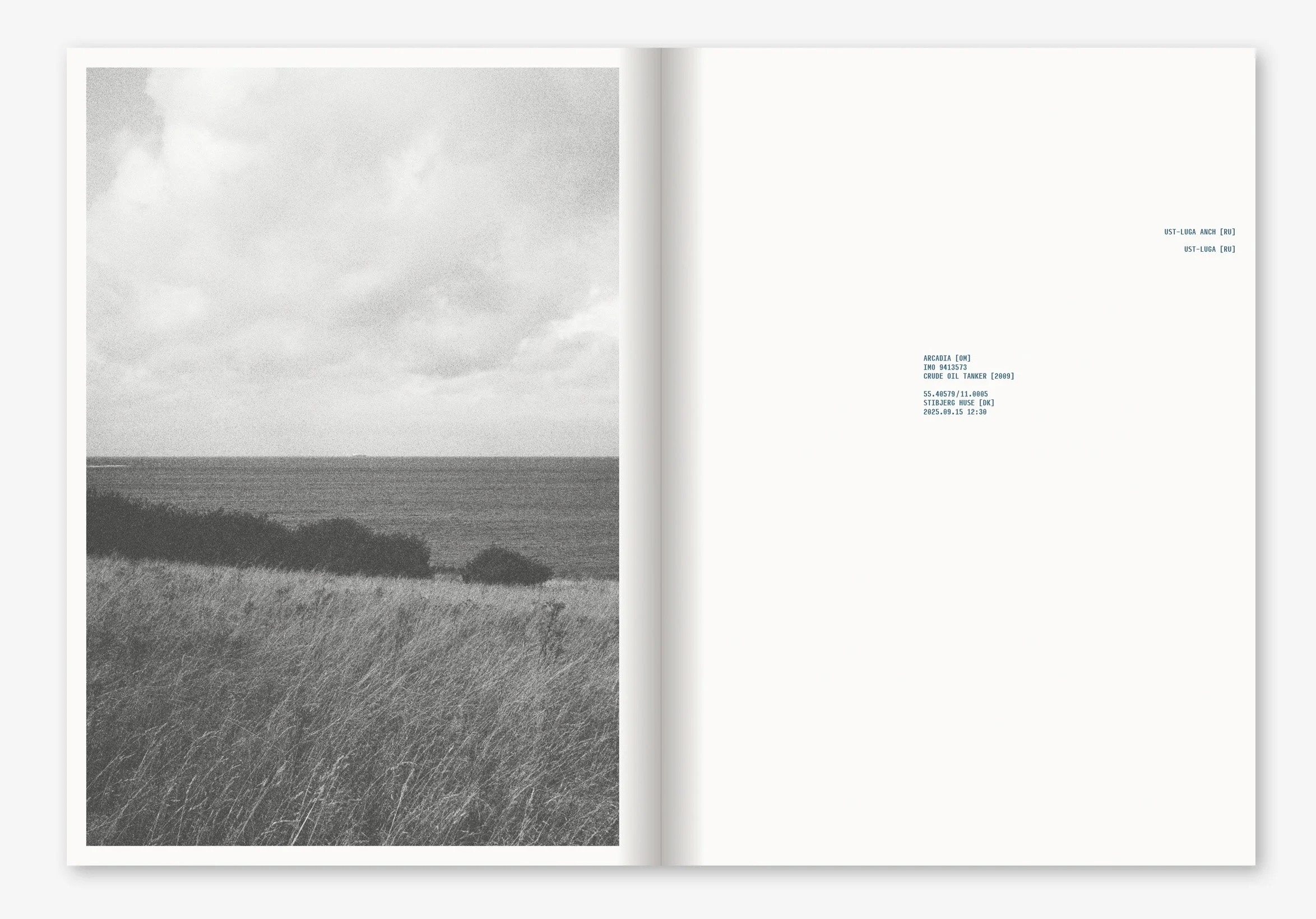
The Shadow Fleet examines the Russian shadow fleet—the oil tankers passing through European waters carrying sanctioned Russian oil.
The shadow fleet is both visible and invisible. The ships can be seen from the shore, yet their purpose, ownership, and routes are often obscured. Denmark’s position as the gateway to the Baltic Sea makes this passage one of the world’s most monitored maritime corridors and a crucial artery for Russian oil exports. In the narrow waterways of the Øresund Strait, global trade and geopolitics come into close view from the Danish coast. Although these waters are Danish territory, the UN Convention on the Law of the Sea grants vessels the right of innocent passage.
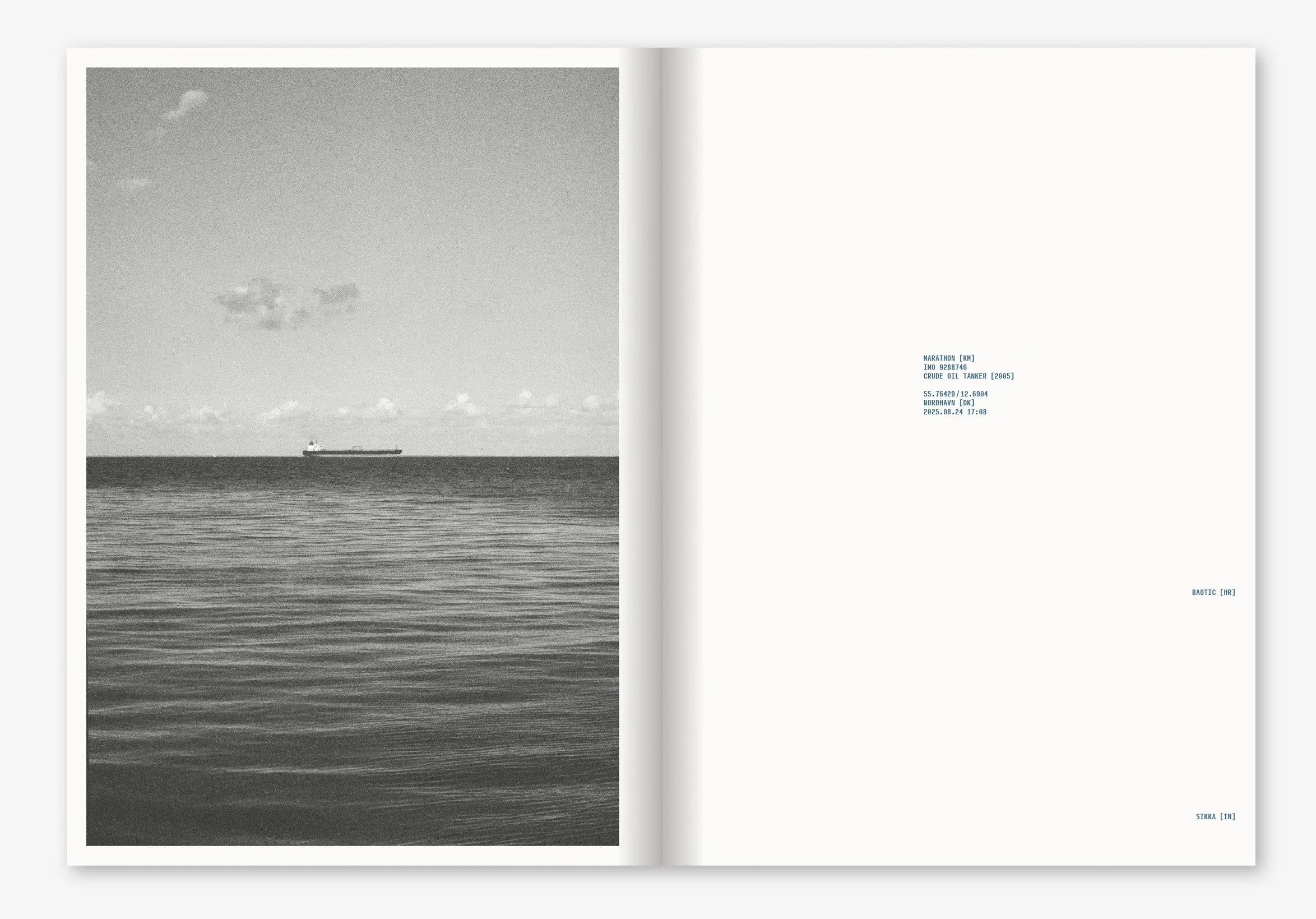
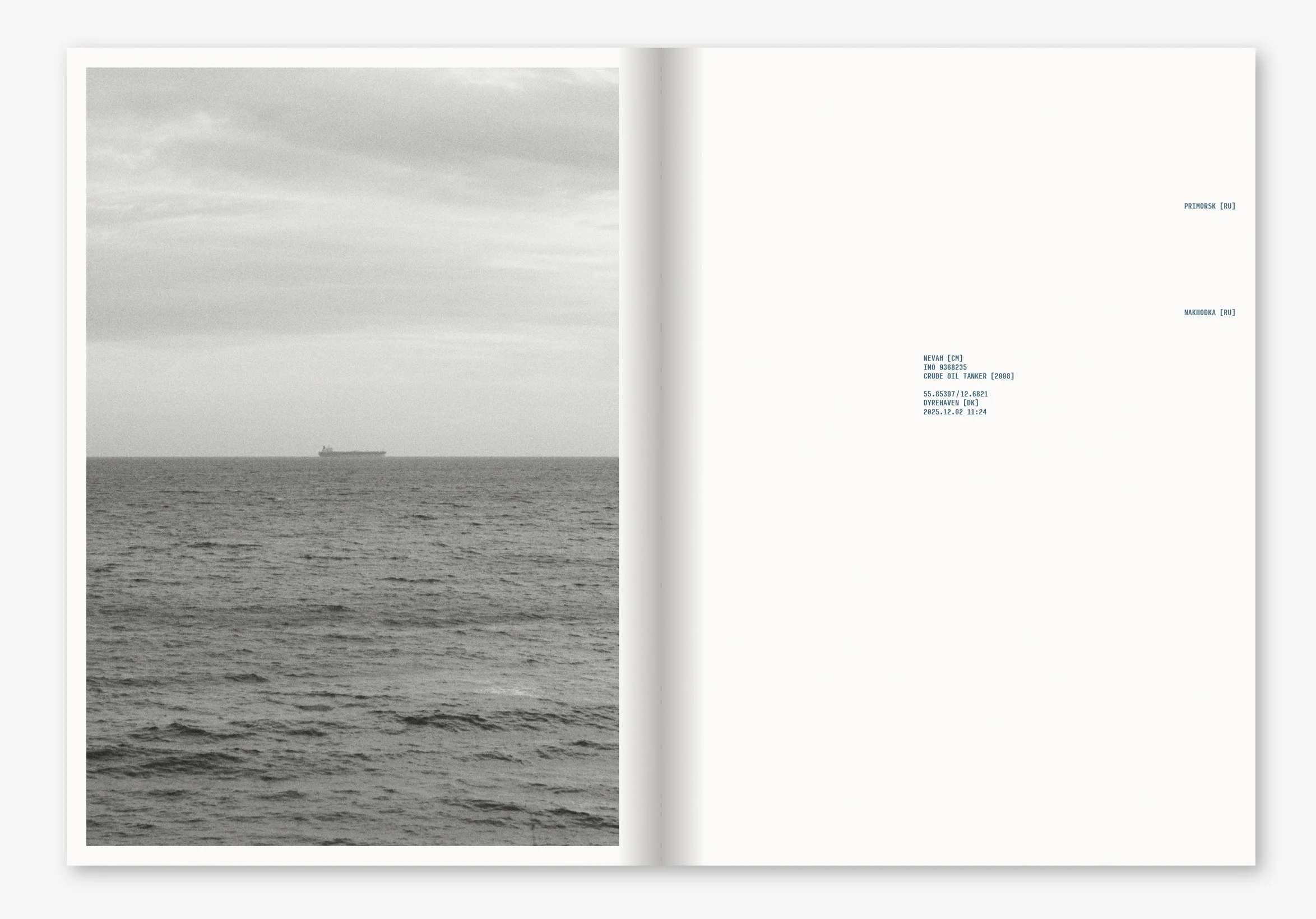
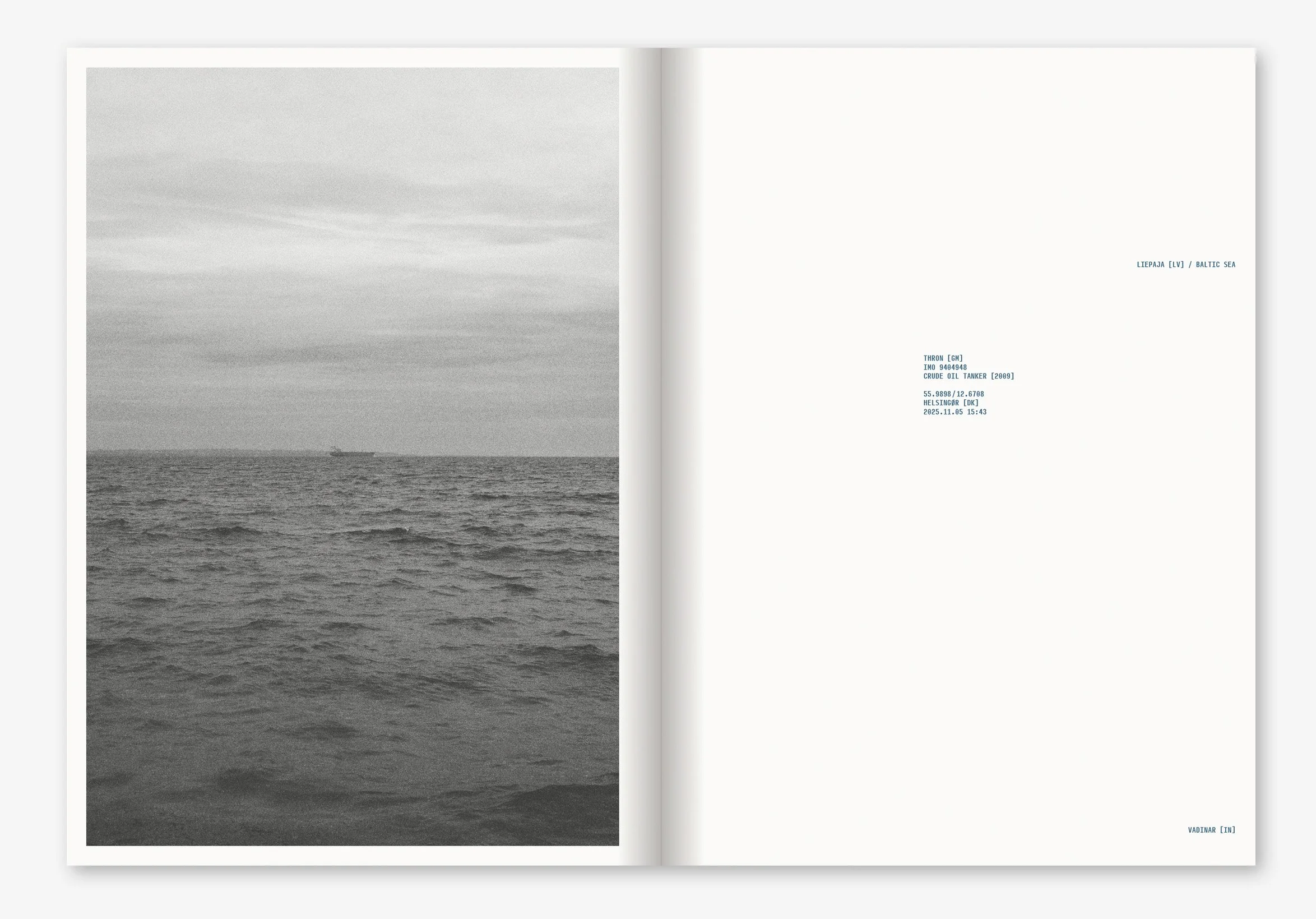
In 2025, Danish photographer Julia Mejnertsen created this logbook of passing ships, in which oil tankers become part of a wider story of sanctions, hybrid warfare, and international trade. The vessels appear both as concrete objects and symbolic figures within a contemporary geopolitical landscape.
The Shadow Fleet is a record and reflection on how we see—and overlook—the infrastructures and flows that shape global trade and conflict.
In 2024, I heard a podcast in which the Danish journalist Jakob Kjøgx Bohr, who has contributed the text The Shadow Fleet and the Rise of Hybrid Warfare to this book, speaks about the Russian shadow fleet. The existence of this dark fleet was completely new to me.
What stayed with me was an unsettling feeling of a curtain fall. I was just like any other ordinary citizen, who, from a moral high-ground despised the war in Ukraine, but all of a sudden I now had a front-row seat to the Russian war machine. I am so used to looking at the beauty of my country’s maritime landscapes with great ships on the horizon, but how could I with this newfound knowledge be able to enjoy it? I felt a strong need to document this dissonance - and the result is what you see in this book. In 2025, 292 shadow tankers sailed through Danish waters, in this book you can see 38 of them. Today, the Russian shadow fleet tankers continue to pass by daily, feeding the Russian war economy. And we just wait. For one of these one-haul tankers to ground and spill its oil, or ram into a bridge or send drones into disrupt our airspace. We are witnessing hybrid warfare at its peak. It should be frightening us all, but somehow we just continue to enjoy the view.
- Julia Mejnertsen
Unbound, offset-printed book
80 pages
38 Photographs
Texts by Michelle Wiese Bockmann and Jakob Kjøgx Bohr
25 x 33 cm
First edition of 500 copies
ISBN 978-91-990235-4-0
Designed by Janne Riikonen and Júlia Ángyán
August 2026
25 €

Shadow Fleet examines the Russian shadow fleet—the oil tankers passing through European waters carrying sanctioned Russian oil.
The shadow fleet is both visible and invisible. The ships can be seen from the shore, yet their purpose, ownership, and routes are often obscured. Denmark’s position as the gateway to the Baltic Sea makes this passage one of the world’s most monitored maritime corridors and a crucial artery for Russian oil exports. In the narrow waterways of the Øresund Strait, global trade and geopolitics come into close view from the Danish coast. Although these waters are Danish territory, the UN Convention on the Law of the Sea grants vessels the right of innocent passage.
In 2025, Danish photographer Julia Mejnertsen created this logbook of passing ships, in which oil tankers become part of a wider story of sanctions, hybrid warfare, and international trade. The vessels appear both as concrete objects and symbolic figures within a contemporary geopolitical landscape.
Shadow Fleet is a record and reflection on how we see—and overlook—the infrastructures and flows that shape global trade and conflict.